The Same Offering
Parshas Naso. And why the Torah repeats itself twelve times.

We are told, constantly, to be original. To stand out. To make our mark. So why does the Torah spend twelve nearly identical passages praising twelve men who all brought the exact same thing?
A large part of this week’s parsha, over 70 pesukim of it, feels long, repetitive, almost unnecessary. Twelve princes bring offerings to the Mishkan, one a day for twelve days. And the Torah writes every detail in full: the same silver dish, the same spoon, the same animals, the same flour.
The Torah, which can compress entire laws into a single extra letter, suddenly turns expansive and repetitive. It could have written the offering once and told us the others brought the same. So why doesn’t it?
The Chofetz Chaim points to something remarkable. Nachshon went first, and the other princes, under the counsel of Nesanel ben Tzuar, chose not to outdo him. No prince tried to bring something grander or more impressive than the one before. They all brought the exact same offering.
And the Torah responds by giving each Nasi something else: his own day, his own space, his own name spoken aloud in the Torah forever. Each prince is remembered by name precisely because he did not insist on being remembered. The recognition they would not grasp for themselves was given to them anyway.
This is where most of us quietly resist. Not the Torah, exactly. We want to make our own mark. We want our offering, our simcha, our home, our table, our children, our accomplishments to feel unmistakably ours.
But ask honestly. If we had stood with the other princes, would we have brought the same korban? Or would we have quietly searched for something a little bigger, a little finer, something that set our gift apart from the rest?
And what would we have been reaching for?
Sometimes the answer is not flattering. We want to measure ourselves against the person beside us, and the finer gift is how we do it.
Sometimes the answer is quieter than that. The pull to be different has very little to do with the offering itself. We are reaching for a little reassurance. A little significance. A feeling that we matter. The larger gift becomes a way of proving something we are not yet fully convinced of ourselves.
Nesanel ben Tzuar understood the difference. By bringing the same offering, the princes stripped away the competition. They showed that their worth did not depend on surpassing the man beside them. And once the contest was gone, their individuality was still completely there.
That is why the Torah repeats each offering separately. The silver and the spoons mattered less than the people who brought them.
And no one applauds it. That is the point. The greatness of what the princes did was that it would not be noticed. No one praises a person who chooses not to insist on himself. There is no photograph of it. The only One watching is the One who counts.
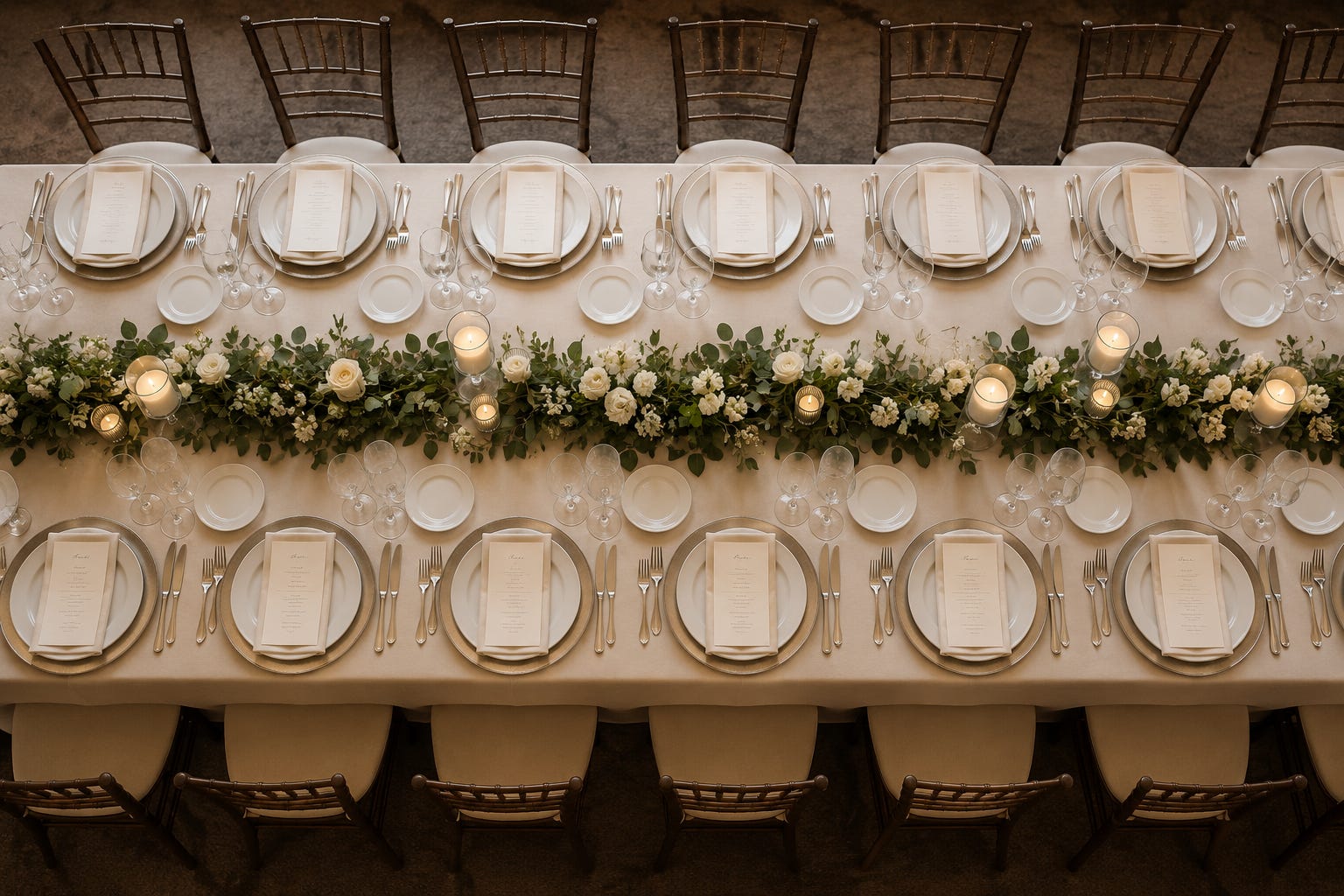
We live now inside an endless scroll of other people’s simchas, every table photographed and quietly measured before we have even set our own.
So the Torah leaves us with a question that is not entirely comfortable.
The next time I feel the pull to make something bigger, grander, more uniquely mine, I might pause and ask: would I still want it this way if there were no one else there to compare it to?
I am not always sure I like my answer.
But the princes understood something that is easy to miss. A person does not become significant by demanding to stand apart. Sometimes the deepest confidence is the willingness not to compete at all.
And perhaps that is why the Torah wrote each of their names down, one at a time.